

The Psychology of Spending: 9 Powerful Reasons People Buy Things They Don’t Need
Have you ever bought something impulsively — a new gadget, clothes, fast food, or an online subscription — only to regret it later?
You’re not alone.
Millions of people struggle with overspending, even when they understand the importance of saving money. The reason is simple:
Spending is not just financial. It’s psychological.
Psychologists explain that emotions strongly influence decision-making, which is why spending is often driven by feelings rather than logic. The American Psychological Association provides valuable research on how emotions shape human behavior.
The psychology of spending explains why people often buy things they don’t truly need. Our brains are deeply influenced by emotions, habits, social pressure, and subconscious triggers that push us toward unnecessary purchases.
In this guide, you’ll discover the real psychological reasons behind overspending — and how to take back control of your financial life.
What Is the Psychology of Spending?
The psychology of spending refers to the emotional and mental processes that influence how people use money.
Spending decisions are rarely purely logical.
Instead, they are shaped by:
- emotions (stress, happiness, boredom)
- identity and self-worth
- social comparison
- advertising and marketing triggers
- habits and impulsivity
- dopamine-driven reward systems
Understanding these psychological factors is one of the most powerful ways to improve your personal finances.
Why People Buy Things They Don’t Need
Overspending is not a character flaw. It’s often the result of psychological patterns that most people never learn to recognize.
Let’s explore the most common reasons.
9 Psychological Reasons People Overspend
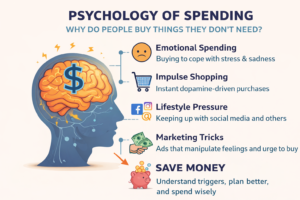
1. Emotional Spending as a Coping Mechanism
One of the biggest causes of unnecessary spending is emotion.
People often buy things to cope with:
- stress
- sadness
- loneliness
- anxiety
- boredom
Shopping provides temporary relief because it activates the brain’s reward system.
But the comfort doesn’t last — and the financial consequences remain.
This is why many people experience “buyer’s remorse” after emotional purchases.
2. Dopamine and the Brain’s Reward System
Psychologists explain that buying something new releases dopamine — a chemical associated with pleasure and motivation.
This is why shopping can feel addictive.
The excitement of a purchase creates a short-term emotional high, even if the item isn’t needed.
Unfortunately, dopamine fades quickly, leading people to chase the next purchase.
3. Marketing Is Designed to Manipulate You
Modern advertising is built on psychology.
Companies use strategies like:
- limited-time offers
- scarcity (“only 2 left”)
- social proof (“best seller”)
- emotional storytelling
These triggers bypass logic and activate impulse.
Understanding consumer psychology helps you resist manipulation.
This is closely related to behavioral finance, a field that studies how psychology impacts money decisions. Experts at Investopedia explain how emotions and cognitive bias affect spending habits.
4. Spending to Feel in Control
When life feels uncertain, spending can create an illusion of control.
People may buy things because it makes them feel:
- productive
- powerful
- secure
This is common during stressful life periods, such as job struggles or relationship issues.
5. Social Comparison and Lifestyle Pressure
Social media has dramatically increased spending pressure.
When you constantly see others with:
- vacations
- luxury items
- perfect lifestyles
Your brain begins to feel “behind.”
This leads to spending driven by comparison rather than need.
True financial freedom comes from ignoring social pressure.
6. Identity-Based Spending
Many people spend money to reinforce their identity.
For example:
- buying expensive clothes to feel confident
- purchasing fitness gear to feel disciplined
- upgrading technology to feel successful
This is called identity spending.
Instead of asking “Do I need this?” the brain asks:
“Does this make me feel like the person I want to be?”
7. Poor Financial Habits and Automation
Overspending is often habitual.
If you automatically spend without tracking, money disappears quickly through:
- subscriptions
- food delivery
- impulse online shopping
Small habits compound into big financial leaks.
Awareness is the first step to change.
8. Stress and Decision Fatigue
After a long day of work or mental effort, your brain becomes tired.
Psychologists call this decision fatigue.
When your willpower is low, you’re more likely to spend impulsively.
That’s why many people overspend at night or after stressful days.
9. Lack of Clear Financial Goals
People without clear financial goals spend more.
When you don’t have a purpose for your money, spending becomes the default.
But when you have goals like:
- building savings
- investing
- buying a home
- financial independence
It becomes easier to say no to unnecessary purchases.
How to Stop Overspending (Practical Psychology Tips)
Here are proven strategies to regain control:
Pause Before Buying
Wait 24 hours before any non-essential purchase.
Identify Emotional Triggers
Ask yourself: “Am I spending because I’m stressed or bored?”
Create a Budget With Flexibility
Include fun money, but keep limits.
Unsubscribe From Marketing Emails
Reduce temptation.
Replace Shopping With Better Rewards
Exercise, hobbies, learning, or social connection.
Focus on Long-Term Freedom
Financial discipline is emotional strength.
FAQ: Psychology of Spending
Why do people overspend even when they know better?
Because spending is driven by emotion, dopamine, habits, and social pressure — not logic.
Is emotional spending normal?
Yes, but it becomes harmful when it turns into a coping mechanism.
Can spending habits be changed?
Absolutely. Awareness and small behavioral changes create long-term transformation.
Final Thoughts: Spending Is Psychological, Not Just Financial
The psychology of spending reveals a powerful truth:
Most money problems are not about math — they’re about emotions and behavior.
Once you understand why you buy things you don’t need, you gain control.
Financial freedom begins in the mind.
Spend intentionally. Save wisely. Build a future you truly want.
Pingback: Psychology Explains: 11 Subtle Behaviors That Reveal Someone