

The Psychology of Attachment Styles : How Your Childhood Shapes Your Adult Relationships
Introduction: The Invisible Threads That Connect Us
Have you ever wondered why some relationships flourish with ease, built on trust and mutual understanding, while others seem perpetually fraught with anxiety, distance, or chaos? The answer often lies in the invisible threads woven during our earliest experiences: our attachment styles. These fundamental patterns of relating to others, forged in the crucible of childhood interactions with primary caregivers, profoundly shape our adult romantic relationships, friendships, and even our professional dynamics. They dictate how we perceive intimacy, respond to conflict, express our needs, and navigate the complex dance of human connection.
Attachment theory, pioneered by British psychoanalyst John Bowlby and further developed by Mary Ainsworth, offers a powerful lens through which to understand these deep-seated relational blueprints. It posits that the quality of our early bonds creates an internal working model – a set of unconscious beliefs about ourselves, others, and the nature of relationships – that we carry into adulthood. Far from being a deterministic fate, understanding your attachment style, and that of your partner, is a crucial step towards fostering healthier, more fulfilling connections. It provides a roadmap for self-awareness, empathy, and intentional growth, allowing us to break free from unhelpful patterns and cultivate the secure relationships we all inherently crave.
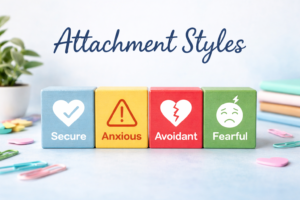
This comprehensive guide will delve into the fascinating world of attachment styles. We will explore the origins of attachment theory, identify the four primary adult attachment styles – Secure, Anxious-Preoccupied, Dismissive-Avoidant, and Fearful-Avoidant – and illuminate how each manifests in adult relationships. Most importantly, we will equip you with practical strategies for healing insecure attachment patterns and consciously moving towards a more secure and satisfying way of relating. By understanding these foundational psychological principles, you can transform your relational landscape, build stronger bonds, and rewrite your relationship story for a future filled with genuine connection and emotional well-being.
I. The Genesis of Connection: Understanding Attachment Theory
Attachment theory is a psychological model that attempts to describe the dynamics of long-term and short-term interpersonal relationships between humans. It focuses on the bonds between children and their caregivers, and how these early experiences influence an individual’s capacity to form and maintain relationships throughout life .
1. John Bowlby: The Pioneer of Attachment
John Bowlby, a British psychoanalyst, was the first to formulate the core principles of attachment theory in the mid-20th century. Dissatisfied with existing psychoanalytic explanations for childhood distress, Bowlby proposed that humans have an innate, biologically programmed need to form strong emotional bonds with primary caregivers. This need, he argued, is an evolutionary survival mechanism, ensuring that infants remain close to those who can protect and nurture them .
Bowlby observed that infants exhibit specific behaviors – such as crying, clinging, smiling, and following – to maintain proximity to their caregivers. He termed these attachment behaviors. When a caregiver is consistently responsive and available, the child develops a sense of security. Conversely, inconsistent or neglectful care can lead to insecurity and distress.
2. Mary Ainsworth: The “Strange Situation” and Attachment Patterns
Mary Ainsworth, a developmental psychologist and Bowlby’s colleague, significantly advanced attachment theory through her groundbreaking research, particularly the “Strange Situation” experiment. Conducted in the 1970s, this observational study involved placing infants and their mothers in a series of brief separations and reunions in an unfamiliar environment .
Ainsworth’s observations revealed distinct patterns in how infants responded to these separations and reunions, leading her to identify three primary attachment styles in childhood:
•Secure Attachment: Infants with secure attachment showed distress when their mother left but were quickly comforted upon her return. They used their mother as a secure base from which to explore the environment.
•Anxious-Ambivalent (Resistant) Attachment: These infants were highly distressed by separation and showed ambivalence upon reunion, seeking comfort but also resisting it. They were often wary of strangers and less inclined to explore.
•Avoidant Attachment: Infants with avoidant attachment showed little distress when their mother left and actively avoided her upon her return. They appeared indifferent to her presence or absence.
Later research, notably by Main and Solomon, identified a fourth category: Disorganized Attachment, characterized by a lack of a coherent strategy for coping with separation and reunion, often displaying contradictory behaviors .
3. Internal Working Models: The Blueprint for Relationships
Central to attachment theory is the concept of internal working models (IWMs). These are cognitive and affective schemas, or mental blueprints, that individuals develop based on their early attachment experiences. IWMs represent our unconscious beliefs about:
•Self: Am I worthy of love and care? Am I competent?
•Others: Are others trustworthy and reliable? Will they be there for me?
•Relationships: Are relationships safe and fulfilling? Or are they sources of pain and anxiety?
These IWMs act as a filter through which we interpret new relational experiences, guiding our expectations, behaviors, and emotional responses in adult relationships. A child who experienced consistent care is likely to develop an IWM that views themselves as worthy and others as reliable, leading to secure adult relationships. Conversely, a child with inconsistent care might develop an IWM that anticipates abandonment or rejection, influencing their adult relational patterns .
4. From Infancy to Adulthood: The Continuity of Attachment Patterns
While attachment styles are formed in childhood, research overwhelmingly demonstrates their significant continuity into adulthood. The patterns of relating learned in infancy tend to persist, influencing how we form bonds, communicate, and cope with challenges in our adult romantic partnerships, friendships, and even professional interactions. This doesn’t mean our adult attachment style is immutable; rather, it highlights the powerful foundation laid in early life. Understanding this continuity is the first step toward conscious change and growth in our relationships .
II. The Four Adult Attachment Styles: Your Relationship Blueprint
While the foundational principles of attachment theory originate in childhood development, researchers have adapted these concepts to describe distinct patterns of relating in adult romantic relationships. It’s important to remember that these styles are not rigid labels but rather tendencies or patterns of behavior and emotional regulation that can fluctuate over time and across different relationships. However, most individuals tend to have a predominant attachment style .
1. Secure Attachment: The Foundation of Healthy Relationships
Individuals with a secure attachment style generally had caregivers who were consistently responsive, sensitive, and available to their needs. As adults, they tend to have a positive view of themselves, others, and relationships. They are comfortable with both intimacy and independence, striking a healthy balance between closeness and autonomy.
Characteristics:
•Comfort with Intimacy and Independence: They can form deep, loving bonds without fear of losing themselves or being overwhelmed. They also feel secure in their own space and pursuits.
•Trust and Openness: They trust their partners, expect reciprocity, and are generally open and honest about their feelings and needs.
•Effective Communication: They communicate their needs clearly, listen actively, and are adept at resolving conflicts constructively.
•Emotional Regulation: They can manage their emotions effectively, seeking support when needed and offering it readily to their partners.
•Resilience in Conflict: They view disagreements as opportunities for growth and can navigate challenges without feeling threatened or resorting to unhealthy coping mechanisms.
Impact on Relationships: Securely attached individuals tend to have the most stable, satisfying, and enduring relationships. They are resilient in the face of stress, supportive of their partners’ goals, and foster an environment of mutual respect and emotional safety.
2. Anxious-Preoccupied Attachment: The Fear of Abandonment
Often stemming from inconsistent or unpredictable caregiving – sometimes responsive, sometimes neglectful – individuals with an anxious-preoccupied attachment style (also known as anxious-ambivalent) tend to crave high levels of intimacy, approval, and responsiveness from their partners. However, they often worry about their partner’s love and commitment, leading to a pervasive fear of abandonment.
Characteristics:
•Craving Intimacy, Fear of Abandonment: They desire extreme closeness but are constantly vigilant for signs of rejection or distance.
•Hyper-vigilance: They are highly sensitive to their partner’s moods and behaviors, often overthinking or misinterpreting signals as threats to the relationship.
•Neediness and Clinginess: They may exhibit demanding or clingy behaviors, seeking constant reassurance and validation.
•Emotional Intensity: They tend to experience emotions intensely and may struggle with emotional regulation, leading to dramatic responses in conflict.
•Low Self-Esteem: Their sense of self-worth is often tied to their relationships, leading to a fear of not being good enough.
Impact on Relationships: Anxious attachment can lead to a rollercoaster of emotions, jealousy, possessiveness, and self-fulfilling prophecies of abandonment. They may inadvertently push partners away with their intensity or perceived neediness, creating the very distance they fear.
3. Dismissive-Avoidant Attachment: The Pursuit of Independence
Individuals with a dismissive-avoidant attachment style typically had caregivers who were rejecting, unresponsive, or discouraged emotional expression. As a result, they learned to suppress their emotional needs and developed a strong sense of self-reliance. As adults, they tend to value independence excessively and often feel uncomfortable with intimacy and emotional closeness.
Characteristics:
•Valuing Independence Excessively: They prioritize autonomy and self-sufficiency, often to the detriment of emotional connection.
•Discomfort with Intimacy: They tend to shy away from deep emotional sharing, vulnerability, and physical closeness, viewing it as a threat to their independence.
•Suppressing Emotions: They often intellectualize feelings or dismiss their own and others’ emotional needs.
•Emotional Distance: They may create distance in relationships through busyness, criticism, or simply being emotionally unavailable.
•Difficulty with Vulnerability: Sharing their inner world or relying on others feels threatening and weak.
Impact on Relationships: Dismissive-avoidant individuals often struggle to form deep, lasting bonds. Their partners may feel neglected, unloved, or unable to truly connect. They may push partners away when relationships become too intimate, leading to a cycle of emotional unavailability and loneliness.
4. Fearful-Avoidant Attachment (Disorganized): The Push-Pull Dynamic
This style, also known as disorganized attachment, often develops in individuals who experienced frightening, unpredictable, or traumatic caregiving. Their caregivers were simultaneously a source of comfort and fear, leading to a profound internal conflict. As adults, they exhibit a confusing mix of anxious and avoidant behaviors.
Characteristics:
•Desire for Intimacy, Fear of It: They crave closeness but are simultaneously terrified of it, leading to a push-pull dynamic in relationships.
•Unpredictable Behavior: Their responses can be inconsistent and contradictory, oscillating between seeking connection and pushing partners away.
•Difficulty Trusting: They struggle to trust others and often anticipate betrayal or hurt.
•Emotional Dysregulation: They may have difficulty managing intense emotions and can react impulsively or explosively.
•History of Trauma: This style is often associated with experiences of abuse, neglect, or unresolved trauma in childhood.
Impact on Relationships: Fearful-avoidant individuals often find themselves in chaotic, intense, and unstable relationships. They may inadvertently recreate the traumatic dynamics of their past, leading to cycles of conflict, breakup, and reconciliation. Their partners often feel confused, frustrated, and emotionally exhausted by the unpredictable nature of the relationship.
Understanding these four attachment styles provides a powerful framework for recognizing patterns in your own relationships and those of others. It’s the first step towards conscious change and building healthier, more secure connections. The next section will explore how these styles manifest in daily interactions.
III. How Attachment Styles Play Out in Adult Relationships
Attachment styles are not just theoretical constructs; they are dynamic forces that profoundly influence the day-to-day interactions, communication patterns, and overall health of adult relationships. Understanding how each style manifests can provide invaluable insight into recurring relational dynamics and help individuals navigate challenges more effectively .
1. Communication Patterns: The Unspoken Language of Attachment
Each attachment style approaches communication differently, often leading to misunderstandings if these underlying patterns are not recognized:
•Secure: Communicate openly, directly, and honestly. They express their needs and feelings clearly, listen actively, and are comfortable with both giving and receiving feedback. They engage in constructive conflict resolution, focusing on solutions rather than blame.
•Anxious-Preoccupied: Communication can be characterized by a strong need for reassurance. They might over-communicate, seek constant validation, or interpret silence as a sign of rejection. In conflict, they may become overly emotional, demanding, or resort to protests to gain attention and closeness.
•Dismissive-Avoidant: Tend to be indirect or suppress their communication of emotional needs. They might intellectualize feelings, change the subject when intimacy arises, or withdraw during conflict. They value self-sufficiency and may see emotional expression as a sign of weakness or a threat to their independence.
•Fearful-Avoidant: Communication is often inconsistent and contradictory. They might oscillate between intense emotional sharing and sudden withdrawal. In conflict, they can be unpredictable, lashing out or shutting down, reflecting their internal conflict between desiring closeness and fearing it.
2. Intimacy and Vulnerability: The Dance of Closeness
The comfort level with intimacy and vulnerability varies significantly across attachment styles:
•Secure: Embrace intimacy and vulnerability as essential components of a healthy relationship. They are comfortable sharing their deepest thoughts and feelings and are receptive to their partner doing the same. They balance closeness with a healthy sense of individual space.
•Anxious-Preoccupied: Crave high levels of intimacy and often push for more closeness, sometimes to the point of overwhelming their partner. They may struggle with boundaries, viewing distance as a threat. Vulnerability can be used to elicit reassurance.
•Dismissive-Avoidant: Experience discomfort with deep emotional intimacy and vulnerability. They may create emotional distance by focusing on external activities, work, or hobbies. They might perceive requests for closeness as clinginess or an attempt to control them.
•Fearful-Avoidant: Have a profound internal conflict regarding intimacy. They desire closeness but are simultaneously terrified of it. This leads to a push-pull dynamic where they might initiate intimacy only to withdraw when it becomes too intense, fearing rejection or engulfment.
3. Conflict Resolution: Navigating Disagreements
How individuals handle conflict is a direct reflection of their attachment patterns:
•Secure: Approach conflict as an opportunity for growth and understanding. They remain calm, express their concerns respectfully, listen to their partner’s perspective, and work collaboratively towards a resolution. They are able to repair ruptures effectively.
•Anxious-Preoccupied: May escalate conflict to gain attention or reassurance. They might become emotional, accusatory, or demand immediate resolution. They struggle with self-soothing and often need their partner to regulate their emotions.
•Dismissive-Avoidant: Tend to avoid conflict altogether, often by withdrawing, shutting down, or intellectualizing the issue. They may see conflict as a threat to their independence or a sign of weakness, preferring to deal with problems alone.
•Fearful-Avoidant: Exhibit highly unpredictable and often volatile responses to conflict. They might lash out in anger, then quickly retreat, or become overwhelmed and disorganized. Their internal fear of both abandonment and engulfment makes consistent conflict resolution challenging.
4. Partner Selection: The Anxious-Avoidant Trap
Attachment styles often play a significant role in who we are attracted to and the dynamics that unfold in relationships. While secure individuals tend to attract other secure individuals, creating stable partnerships, insecure styles often find themselves in predictable, yet challenging, pairings .
One of the most common and often painful pairings is the anxious-avoidant trap. Anxious individuals, with their intense need for closeness and fear of abandonment, are often drawn to avoidant individuals, who value independence and create distance. The anxious partner pursues, seeking reassurance, while the avoidant partner withdraws, feeling suffocated. This creates a self-perpetuating cycle where each partner’s behavior triggers the other’s deepest fears, reinforcing their insecure attachment patterns.
5. The Cycle of Insecurity: Perpetuating Unhealthy Patterns
Without conscious awareness and effort, insecure attachment styles can lead to a cycle of insecurity. Anxious individuals may become increasingly clingy, pushing away partners who then confirm their fear of abandonment. Avoidant individuals may become increasingly distant, leading partners to feel unloved and eventually leave, confirming their belief that intimacy leads to pain or loss of self.
Recognizing these patterns is the first crucial step towards breaking the cycle. It allows individuals to move from reactive behaviors to intentional choices, fostering healthier dynamics and ultimately, more secure relationships. The next section will explore strategies for healing and growth.
IV. Healing and Growth: Moving Towards Secure Attachment
While our early experiences lay a powerful foundation for our attachment styles, it is crucial to understand that these patterns are not immutable. Attachment styles are learned behaviors and beliefs, and like any learned behavior, they can be unlearned and reshaped. The journey towards secure attachment is one of self-awareness, intentional effort, and often, courageous vulnerability. It involves recognizing your patterns, understanding their origins, and actively choosing to respond differently in your relationships .
1. Self-Awareness: Identifying Your Attachment Style and Triggers
The first and most critical step in healing is to accurately identify your own predominant attachment style. This involves honest self-reflection and observation of your behaviors and emotional responses in relationships. Ask yourself:
•How do I typically react when my partner needs space or seems distant?
•How do I feel when my partner expresses a need for more closeness?
•What are my deepest fears in relationships (e.g., abandonment, engulfment, betrayal)?
•What patterns do I notice in my past relationships?
Understanding your triggers – the specific situations, words, or behaviors that activate your attachment fears – is equally important. Once you can identify these, you gain the power to pause and choose a different response rather than reacting automatically.
2. Understanding Your Partner’s Style: Empathy and Perspective-Taking
Just as important as understanding your own style is gaining insight into your partner’s. This fosters empathy and helps you interpret their behaviors more accurately. For example, an anxious partner might misinterpret an avoidant partner’s need for space as rejection, while an avoidant partner might see an anxious partner’s desire for closeness as clinginess. Understanding their underlying attachment needs can transform conflict into connection.
3. Developing Emotional Regulation Skills: Managing Anxiety and Fear
Insecure attachment styles often involve dysregulated emotions, particularly anxiety and fear. Learning to self-soothe and manage these intense feelings is vital. Strategies include:
•Mindfulness and Deep Breathing: Practicing these techniques can help you stay present and calm during moments of emotional intensity.
•Journaling: Writing down your thoughts and feelings can provide clarity and help process emotions.
•Healthy Distractions: Engaging in activities that bring you joy or calm can provide a temporary respite when emotions are overwhelming.
•Cognitive Restructuring: Challenging negative thought patterns and replacing them with more realistic and positive ones.
4. Improving Communication: Learning to Express Needs Clearly and Listen Actively
Effective communication is the cornerstone of secure relationships. This involves:
•”I” Statements: Expressing your feelings and needs without blaming your partner (e.g., “I feel lonely when you don’t text me back” instead of “You always ignore me”).
•Active Listening: Giving your partner your full attention, seeking to understand their perspective, and validating their feelings.
•Assertiveness: Clearly and respectfully communicating your boundaries and expectations.
5. Setting Healthy Boundaries: Protecting Your Emotional Well-being
Boundaries are essential for all relationships, but especially for those with insecure attachment. They define what you are and are not comfortable with, protecting your emotional and mental space. This can involve setting limits on communication frequency, personal space, or emotional demands. Clearly communicating and enforcing these boundaries is a sign of self-respect and fosters mutual respect in the relationship.
6. Seeking Secure Relationships: Choosing Partners Who Are Emotionally Available and Responsive
While it’s possible to grow into secure attachment within an existing relationship, choosing partners who exhibit secure traits can significantly accelerate your healing journey. Secure partners provide a “secure base” and a “safe haven,” offering consistent responsiveness, emotional availability, and respect for your autonomy. They model healthy relational patterns and provide corrective emotional experiences.
7. Therapy and Support: When Professional Help Is Beneficial
For individuals with deeply ingrained insecure attachment patterns, especially those stemming from trauma (often associated with disorganized attachment), professional therapy can be incredibly beneficial. Individual therapy can help process past experiences, challenge negative internal working models, and develop healthier coping mechanisms. Couples therapy can help partners understand each other’s attachment styles and develop more secure ways of interacting.
8. Corrective Emotional Experiences: Building New, Positive Relationship Experiences
Healing from insecure attachment is largely about having corrective emotional experiences. These are new, positive relational interactions that contradict your old, negative internal working models. Every time you successfully navigate a conflict, feel truly heard and understood, or experience consistent love and support, you are actively rewriting your relational blueprint. This process takes time, patience, and consistent effort, but the rewards of secure attachment – stable, fulfilling, and joyful relationships – are immeasurable.
Conclusion: Rewriting Your Relationship Story
Our journey through the psychology of attachment styles reveals a profound truth: the way we connect with others is deeply rooted in our earliest experiences, yet it is not our unchangeable destiny. The invisible threads of attachment, woven in childhood, shape our adult relationships in powerful and often unconscious ways, influencing our communication, our comfort with intimacy, and our responses to conflict. From the trusting embrace of secure attachment to the anxious pursuit of closeness, the dismissive retreat of avoidance, and the chaotic push-pull of disorganization, each style offers a unique lens through which we experience love and connection.
However, this understanding is not meant to label or limit us, but to empower us. By recognizing our own attachment patterns and those of our partners, we gain the invaluable gift of self-awareness. This awareness is the first, crucial step towards intentional change – a journey of healing and growth that allows us to move beyond reactive behaviors and cultivate the secure, fulfilling relationships we inherently desire. It involves developing emotional regulation, improving communication, setting healthy boundaries, and actively seeking or fostering environments that support secure connection.
Remember, every interaction is an opportunity to rewrite your relationship story. Every conscious choice to respond with empathy, vulnerability, and understanding is a vote for a more secure future. Whether through self-reflection, open dialogue with a partner, or the guidance of a therapist, the path to secure attachment is accessible to all who are willing to embark upon it. Embrace this journey of self-discovery, for in understanding the psychology of attachment, you unlock the potential to build relationships that are not just enduring, but deeply enriching, truly connected, and profoundly secure.
read also : The Psychology of Habits: How to Build Better Routines and Break Bad Ones
Pingback: The Psychology of Loneliness: 7 Powerful Insights Into